In The Ladies Man (1961), Jerry Lewis got as close as he'd ever allow the Idiot to get to being a conventional handsome leading man. Even when he later split himself up into abysmal nerd and swinging lady killer in The Nutty Professor (1963), he had to make up for it by giving Buddy Love an ugly personality (resulting, naturally, in Misaimed Fandom). In Lewis's first proper solo vehicle, Rock-A-Bye Baby (1958) (The Delicate Delinquent, which sounds like a Morrissey song title*, had been intended as a Martin and Lewis vehicle, but they split up), director Frank Tashlin put great ingenuity behind making the now over-30 “juvenile” into a viable romantic lead, but the Lewis persona was still gawky-geeky. As the title, with its double meaning, suggests, The Ladies Man wanted to propose Lewis as a rival to his ex-partner's screen persona, even while he took back the audacious suggestion at the same time. It was a double bind: on the one hand, the Martin “half” of the act was even more necessary to Lewis (psychologically, and in terms of his image in the public mind) than Martin himself, so he had to incorporate it into his own, diametrically opposite persona; on the other hand, the incorporation couldn't be too successful, or he'd cease to be “Jerry Lewis.” You can't be the spastic, infantile/adolescent comic and also the handsome straight man. Though Lewis made this impossible attempt more than once, and in more than one way.
To create this new persona, Lewis – who claimed that the films he made as auteur were attempts to recapture the glamour of the studio-era Hollywood films he adored in his youth, which were already a thing of the past in the early 60s – drew not only on Martin but on two of his screen idols: Cary Grant and Gene Kelly. Grant still had a certain association with Martin: in their TV spots, and presumably in their nightclub act, Martin sometimes did a Grant impersonation, underlining their physical resemblance. So to make the glamourous Grant persona more amenable to the nerdy Lewis one, Lewis specifically drew on Grant's performance as a bespectacled absent-minded professor in Bringing Up Baby. (It's important to note that part of the audacity of presenting himself as a sex symbol for Lewis was, doubtless, the problematic idea of the Jewish man as Hollywood sex symbol. Lewis's frienemy Tony Curtis had managed it, but hadn't presented himself as nearly as “ethnic” as Lewis, who had catapulted the Borscht Belt comedic tradition into a post-vaudeville age.)


Gene Kelly, on the other hand, was all Lewis's. As a remnant of the bygone vaudeville age (in Oedipal emulation of his vaudevillian father, whom Lewis hero-worshiped as he did Martin), Lewis knew all the basics of entertainment, including dance; in fact, his pal Sammy Davis Jr. honoured him with the epithet “the great white faker.” But his identification with Gene Kelly went beyond his skills and pretensions as a dancer. In fact, it's when he's not dancing that Lewis is most Kelly-like, the most physical physical comedian of them all, as Kelly was the most physical screen dancer. Despite having greater balletic and avant-garde dance aspirations (or pretensions, as Astaire-favouring critics have it) than his rival for greatest screen dancer, Kelly had a working-class onscreen persona and, unlike the top hat-and-tailed Astaire, favoured form-fitting clothing that revealed his stocky athletic build, necessary for his athletic, earthy performance as a dancer. (Astaire, in Paglia's fanciful comparison of him to Byron's poetry, glides over the surfaces of furniture indoors. In contrast, Kelly's most memorable dance routines – in Cover Girl, An American in Paris, Singin' in the Rain – take place in the streets.) And that admiration he courted for his body as an artist was part and parcel with the narcissism of which he's also been accused, and with which Lewis could also identify – or more precisely, he could identity with the Kelly persona's incongruous combination of narcissism and populism.

The Ladies Man is a dreamlike, surreal homage to studio-era Hollywood glamour and fantasy, set in a lifesize dollhouse of Lewis-the-auteur's devising, in which a vast array of pretty, candy-coloured women, all aspiring performers, hover in hive-like cells. It's the old Don Juan-in-the-harem gag, with the catch that Herbert Heebert isn't the wolf in sheep's clothing... he's the eunuch in eunuch's clothing. Women-as-dolls are this girl-boy's favourite, forbidden playthings; as living, emotional, sexual creatures, they're his worst nightmare. Yet it's a nightmare that Herbert – and Lewis – feels compelled to confront.
The Bringing Up Baby tribute plays out in a recurring gag involving Herbert Heebert's attempts to care for an unseen, ferocious, malleable, Schroedinger's cat named Baby, who's revealed (but not necessarily “finally”) as a lion in the film's punchline. Baby is behind one forbidden door, which Herbert is forced to breach in order to fulfil his duties to his protector, the fleshy, benevolent-but-strict opera diva who owns the place. Behind that door, the hunk of raw meat that Herbert arduously delivers as an obscene offering is reduced to bone in a cartoon instant. The other forbidden door is basically the same as the first, leading to a liminal space of transformation which, like Baby's room, is associated with a deadly, devouring femaleness. This second door belongs to a Miss Cartilage, and Herbert is repeatedly warned not to enter it – which of course he must, out of the same Pandoran/moron curiousity that gets him into trouble throughout. But never quite this much trouble.
What ensues when he does is a sequence justly admired by the handful of cineastes brave enough to admit the obvious – that The Ladies Man isn't a dopey/campy/kitschy entertainment but an infinitely strange art film. In this Forbidden Room or White Room sequence, Lewis reimagines two key moments of classical Hollywood fantasy: the film-within-the-film from Singin' in the Rain, which pairs Kelly with Cyd Charisse; and the exploration of Rebecca's bedroom in Rebecca. The Broadway Melody sequence in Singin' in the Rain is an audaciously long (and, to Kelly's detractors, self-indulgent) interruption of the narrative by what's essentially another film, and one which includes a lengthy fantasy sequence within it. In this story, a nerded-up Kelly (in glasses and hat with the brim dorkily turned up) is a rube arrived in New York from the country, who meets up with tall, leggy femme fatale Charisse, a gangster's moll. She denudes him of his illusions by plucking off his glasses and using her endless, muscular leg as a hatstand for the silly hat while he's on his knees in front of her. The poor boy goes into the raptures of an abstract balletic fantasy involving an unbelievable length of white silk fluttering in a wind machine, but is eventually snapped back to reality, in which the helmet-haired, hard-hearted dame prefers to stay where the money is. But all-American can-do optimist that he is, he's only momentarily crushed before he remembers the true passion she's distracted him from, the only truth that matters: that he's gotta dance (gotta entertain, gotta feel the joy and energy of the rhythm).


In Rebecca, the mousy, anonymous “second Mrs. de Winter” enters a mansion haunted by a feminine presence that makes her feel overwhelmed and inadequate. Like Herbert, the gauche, naive young woman does everything wrong, including breaking a precious object belonging to “the lady of the house.” And like Max de Winter, Herbert has been traumatized by the memory of a woman who sexually betrayed him, which makes him emotionally inaccessible. Unlike the heroine of Rebecca, Herbert is aided by a kindly housekeeper/secretary (in the form of frequent collaborator Kathleen Freeman; when an elderly Lewis said that female comedians weren't funny, he'd apparently forgotten the comedy partner with whom he had the most chemistry post-Martin), whereas the second Mrs. de Winter is undermined by her sadistic housekeeper, Mrs. Danvers, who remains fiercely, quasi-erotically in thrall to her late mistress. The mystery of Manderley collects in the charged atmosphere of Rebecca's bedroom, kept as a shrine by Mrs. Danvers, to which the second Mrs. de W's curiousity finally, masochistically leads her. Hitchcock's rendering of this haunted, erotic space is memorably gorgeous: seemingly endless, full of light and transparent, aerated feminine fabrics that only accentuate the mesmeric stillness.

To these influences Lewis, I think, adds a third: one of his own previous films. The six solo Lewis films directed by Tashlin, beginning with Rock-A-Bye Baby in 1958 and ending with The Disorderly Orderly in 1964, constituted the second great artistic collaboration of Lewis's career. Historians of the Tashlin-Lewis collaboration have suggested both that Lewis learned how to direct from Tashlin and that Lewis's role in the Tashlin films may have been more collaborative than normal for a star. Accordingly, it's not easy to know who came up with the ideas in the Tashlin-Lewis films; what's certain is that Lewis used, transformed, and developed them in his own films, as though those existed in a creative continuum with his work with Tashlin (which, however, has a distinctly different flavour than the auteur Lewis films). The all-white room in The Ladies Man, against which Miss Cartilage appears in contrasting black, seems to be an evolution of a gag at the beginning of Rock-A-Bye Baby in which Lewis causes a cloud of soot to invade and soil the all-white living room of an elderly woman. (There's a more obvious evolution of this gag as a gag in the scene where Lewis approaches the tough-guy gangster he previously reduced to a nervous wreck with his hands covered in oil, perhaps from Buddy Love's hair, while the latter is wearing a white suit.)

Even more, however, the Forbidden Room sequence seems to draw on the most remarkable scene from the first film Lewis made with Tashlin, the 1955 Martin and Lewis vehicle Artists and Models: Shirley MacLaine's staircase serenade of Lewis with “My Innamorata.” Ballet-trained MacLaine handles the physicality of the scene nimbly, and her movements as she tries to entice, lure, hypnotize, block, and tackle Lewis reminded me on first viewing of some kind of stick-insect or spider. The Freudian plot of her romantic trajectory with Lewis involves his reconciling his adolescent erotic fantasy of the comic book dominatrix The Bat Lady, for which, unbeknownst to him, MacLaine served as the artist's model (the artist in question is her female roommate, but that's another blog post) with a flesh-and-blood woman, of which he remains terrified.
Lewis seemed to merge these ideas into the singular creation, Miss Cartilage, part-spider, part-bat, and all dominatrix. She's introduced by lowering herself from the ceiling, hanging upside down, dressed all in black... including the hood over her face, that covers her eyes and almost her nose but reveals the morgue-white skin of the lower half of her face and her blood-red lips. Wait – what's mummification/asphyxiation kink doing in a Jerry Lewis comedy? We won't see anything like this again in a Hollywood family movie until the Tobey Maguire Spiderman (remember that kissing scene?).


But the fact is that The Ladies Man is a spectacularly kinky film, beginning with our hero's name, Herbert Herbert Heebert, which is surely a reference to Humbert Humbert: after causing a scandal in the UK and France, Lolita was published in America in 1958 and became an instant bestseller. Lewis is Humbert-the-pervert, but he's also Lolita, which is what seemed to happen to the (cutesified) Lewis persona when it was put on film, culminating in The Delicate Delinquent, where – I'm not kidding – he plays a directionless young man who's “taken in hand” by a police officer (the role Martin was supposed to play) who stalks him to his apartment and invites him over to dinner. All in the interest of straightening out misguided youth, of course. Lewis, now in his mid-thirties, makes his infantilization so literal in The Ladies Man that he ends up in a highchair being fed by Kathleen Freeman in a scene so bizarre and outrageous that I nearly died laughing the first half-dozen times I saw it. (And that, in case you ever wondered, is the nature of Lewis comedy: it's not always that it's funny.)
Oddly enough, Herbert isn't obliterated by his encounter with the Spider Lady, played by Sylvia Lewis (no relation, Lewis clarifies in the commentary), who powerfully evokes Charisse in Singin' in the Rain although costumed quite differently. On the contrary, facing up to her – even if it mainly involves getting chased around the room – causes Herbert to “man up” for the only time in the film, even if that involves dancing with her to big band music in a snazzy suit. Like a sped-up version of Kelly's transformation from nerd to balletic lover in the Broadway Melody sequence; although, as in Cinderfella, Lewis is both the prince and the fairy tale maiden in this scenario. Somehow or other, these two – Herbert and Miss Cartilage – although opposites, are twins. After removing her mask, she hands it to him like he ought to know what to do with it, or like she's passing the torch, and this sexually charged bit of material is what he's left holding after he leaves the room, to show him that he didn't dream it all. As for Miss C, after their dance she retires to her bed and stretches out felinely behind the transparent curtain. They've hardly touched (and note how Lewis manhandles her head in the image above like it's an alien object), and indeed, one of her myriad fetishes appears to be not-touching (which makes another point of connection with the black hands-and-white suit gag). In other words, the female self-pleasuring of waiting and fantasizing. Suspended in gaffa, as Kate Bush put it. She'll be waiting for him in her all-white lair, when he's ready, if he ever is. (Would you be?)


The Ladies Man is Lewis's self-castrating homage to female power and the feminine (ironic, then, that – like a male version of Bette Davis in Jezebel – he was never handsomer than in this film), and Miss Cartilage is a to-the-letter phallic mother, enshrined in a taboo psychological space: both holy (surrounded by white) and demonic (covered in black). Whatever his offscreen sexual preferences, onscreen Lewis is queer in persona and, in The Ladies Man, in imagination and sensibility. But queer fantasies can tell us a lot about heterosexual male fantasies too, when it comes to women. (Here's a fun list of phallic mothers from popular culture, in which the Freudian concept is explained as “not a woman with a penis, but a woman with the symbolic power of a potent male.”)
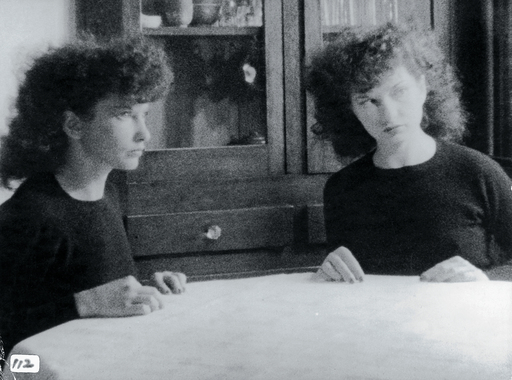
The Miss Cartilage sequence is The Ladies Man in miniature: at once a fantasy and a nightmare of being absorbed by femininity. Lewis's relationship to both femininity and masculinity is staggeringly ambivalent; which one can take as either cause or effect of his “queerness,” as you like; at any rate, it's the content of it. The exact nature of the fantasy here, as in many of the Ladies Man sequences, is so obscurely private as to be opaque; but that's exactly what makes The Ladies Man as fascinating as any recognized “art film,” despite Lewis's old school vaudeville/classical Hollywood commitment to entertainment and spectacle. It belongs not only to the history of surrealist comedy, with Tati, Tex Avery, Tashlin, and the Fleischer Brothers, to name a few, but to the history of surrealist/erotic filmmaking, with Deren and Lynch (and at moments, Hitchcock). The most Lynchian moment, for me, is when Herbert encounters a Southern Belle whose accent is so thick as to be incomprehensible: it's a vaudeville joke, but in the context of The Ladies Man it's a comment on the fearful alienness of femininity. It may be one of Lewis's surrealist sound experiments, and reminds me of Lynch's backwards-talking dream dwarf. (What Lynch and Lewis have in common in particular, besides their assumption of a seriously "off" boy-next-door persona, is their perception/assertion of a continuity between the unconscious, fantasy, and the essence of glamourous studio-era Hollywood cinema, product of the Dream Factory.)
Another example of such surrealist filmmaking is Cocteau's Orphee, in which Maria Casares is a superb phallic mother, and dangerous Dark Muse to the poet, as Miss Cartilage perhaps was to Lewis.


Herbert Herbert may have sacrificed his Heebert to gain entrance to the darkly magical all-female space of The Ladies Man (at least he's got two Herberts in case he loses one), but to survive within in it proves he's a bigger man than the Hollywood macho male with whom he's also in ambivalent, opposites-attracting relation: the other person he dances with in The Ladies Man is George Raft, playing himself. Lewis loves psychological redundancy, and Raft's double within the film is the gangster played by Buddy Lester. (Criss cross: Raft, in the film, is a real person who played fictional gangsters; Lester plays a fictional real gangster.) In what's probably the objectively funniest sequence of the film – and Lewis's career – we watch in trepidation for the tough guy to demolish the sissy – instead of which, in torturous slow motion, the opposite happens. Lewis's hysterical nervousness communicates itself to proper males and causes them to unravel, while Lewis, who's used to the chaos, remains “in control.” But if I can be Mark Simpsonist about this: the cause of the scene's hilarity is its deconstruction of masculine male vanity. Lester's gangster (in a concept brilliantly realized by Lester) is paralyzed with horror by Lewis's ministrations because if his tough guy image is a hair – or thread – out of place, he can't function. As in The Nutty Professor – Lewis's other colour, and queer, auteur masterpiece – Lewis anticipates Simpson's concept of metrosexuality, due to his sharp understanding of masculinity – based, in part, on his own “feminine” alienation from it.

*Oh wait, it is: "Sweet and Tender Hooligan."